Parents exploring early childhood education options often wonder about the differences between preschool and daycare…
Creative Arts as a Foundation for Learning in Preschool
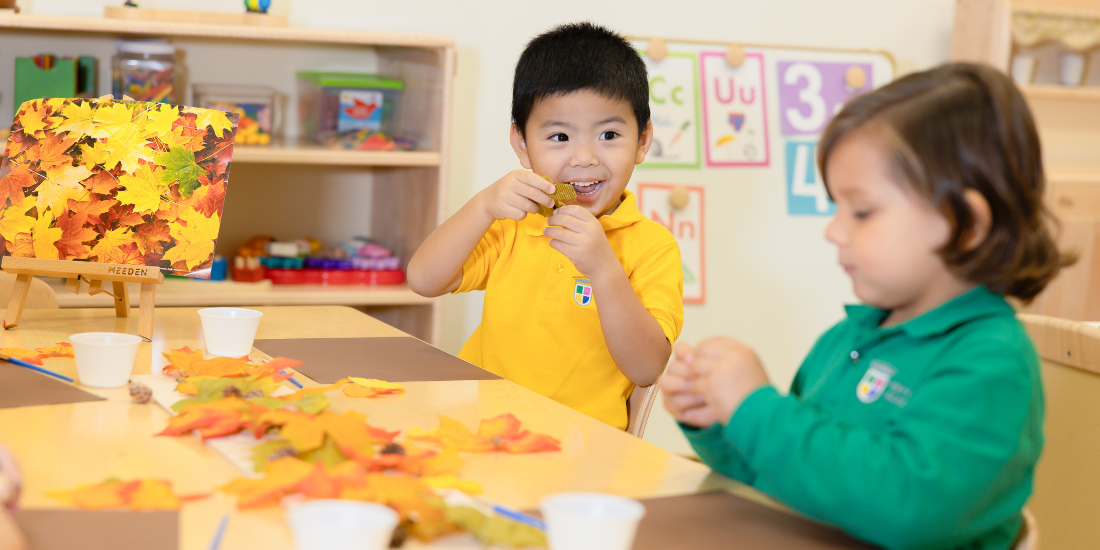
In the vibrant world of preschool education, creative arts are often associated with messy activities that keep children entertained. However, creative arts in early childhood education encompass so much more and play a critical role in a child’s development. From enhancing fine motor skills to encouraging emotional expression, these activities lay a significant foundation for future learning. Let’s delve into the multifaceted benefits of incorporating creative arts in preschool settings.
Cognitive Benefits
Firstly, creative arts offer substantial cognitive benefits. Through drawing, painting, clay exploration, and collage activities, children develop crucial thinking and problem-solving skills. These activities encourage them to explore and innovate, stimulating cognitive growth by challenging them to think in new ways. According to USA Facts, nearly 66% of preschool-aged children attend early education programs, highlighting the importance of integrating creative arts into their daily curriculum to nurture these developing minds.
Social and Emotional Development
Moreover, creative arts play a vital role in enhancing social and emotional development. While engaging in group arts activities, children learn essential social skills such as sharing, collaborating, and communicating effectively. Artistic expression also allows them to explore their emotions and develop empathy by understanding different perspectives. This personal and social growth is crucial as children begin to form foundational relationships with peers and teachers in preschool settings.
Fine Motor Skills
Additionally, art activities in preschool promote the development of fine motor skills, which are foundational for future writing and other daily tasks. Manipulating art materials like crayons, brushes, scissors, and clay helps refine children’s hand-eye coordination, strength, and dexterity. As they practice these movements, they prepare themselves not only for academic pursuits but also for practical, everyday self-help skills. The structured yet flexible nature of these activities provides children with a safe space to experiment and grow their abilities.
Creative arts in a pre-K program go far beyond simply keeping entertained. They serve as a powerful vehicle for cognitive, social, emotional, and physical development, equipping children with essential skills for success in school and life. By recognizing and embracing the wide-ranging benefits of creative arts, educators and parents can support a holistic approach to childhood education that fosters lifelong learning and discovery. Let’s celebrate the artful masterpieces created in preschool classrooms and appreciate the profound impact they have on young learners’ lives. Call Key Point Academy Doral today to learn more about our creative arts pre-K program.
Related Articles